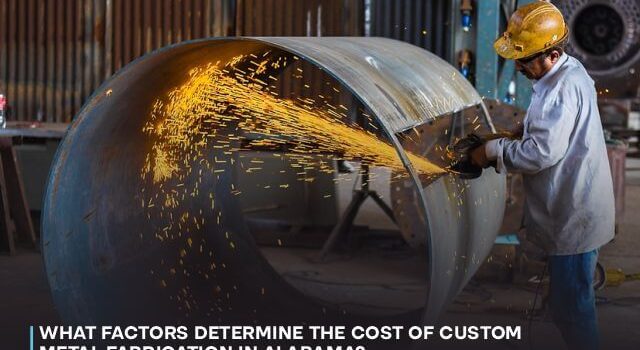
When a business or individual in Alabama commissions a custom metal fabrication project, the final cost can vary widely—from modest sums for simple parts to tens of thousands of dollars for large-scale or highly intricate jobs. For organizations working with or considering an experienced shop like Blue Creek Iron Works, understanding the variables that shape pricing is essential.
This article outlines the key factors that determine how much custom metal fabrication costs in Alabama, offering clear insight and examples to help make informed decisions. Whether you’re seeking support from local specialists in Alabama metal fabricators or comparing proposals, the deeper you understand the cost drivers, the better your outcome.
1. Material Selection — The Foundation of Cost
One of the most significant cost drivers in any fabrication project is the material chosen. This includes the type of metal, its alloy, grade, thickness, and how much waste or scrap is involved.
1.1 Metal Type and Grade
Common metals include carbon steel, stainless steel, aluminum, copper, and more exotic alloys. Each has a different price per pound or square foot and different fabrication challenges. For instance, stainless steel is more expensive than basic carbon steel due to corrosion resistance and machining demands. Similarly, aluminum may cost more than plain steel but offers benefits like lighter weight and rust resistance.
1.2 Thickness, Size, and Shape
The thickness of the material influences both the cost of the metal itself and the processing. Thicker or larger pieces mean more raw material and more machine time (for cutting, bending, welding), which increases labour and operational cost. As one expert explains: “the single largest factor … is the type and quantity of raw materials used.”
For example, fabricating a heavy steel support component with a ½-inch plate will cost significantly more than a decorative 16-gauge steel panel.
1.3 Material Availability & Market Volatility
Prices for raw metals fluctuate with global supply and demand, logistics, and regional sourcing. Using more readily available metals or standard gauges and sizes often helps keep budgets under control.
In Alabama, local supply channels and transport costs matter too: working with a nearby Alabama metal fabricator’s shop reduces freight and handling expenses, which affects your total cost.
1.4 Finishes and Secondary Materials
Beyond the raw metal, finish treatments (powder coat, galvanizing, anodizing) and any hardware (bolts, hinges, mounting plates) add to the material cost. These should be viewed as part of the “material” bucket rather than just the labour.
Example: Suppose a client wants a stainless steel outdoor structure for a facility in Alabama with a powder-coat finish. The stainless base metal is premium, and the finish adds further cost. A more economical alternative might use coated carbon steel if corrosion resistance demands are lower.
In short, the metal choice sets a major chunk of the budget. Early material decisions influence everything downstream—from machine choice to labour time to finishing.
2. Design Complexity and Project Requirements
Once material is selected, the design of the piece or assembly becomes the next big cost driver. The more complex the design, the more time, setup, and skill required.
2.1 Number of Operations and Processes
Each cut, bend, weld, or finish operation adds time. According to manufacturing-estimation literature, “the number of operations (flip of the part)… increases cost because of load/unload time, machine time, and programming.”
In fabrication shops, more steps mean more labour, more setup changeovers, and greater opportunity for delay or error. One guide listed design as a top factor: “the more intricate and detailed your design … the higher the costs will be.”
Example: A simple rectangular steel plate welded to two angle brackets will cost far less than a multi-piece assembly with curved bends, laser-cut features, custom holes, and secondary machining.
2.2 Tolerances, Welding, and Skill Level
Tight tolerances (how exact dimensions must be), specialty welding (TIG, automatic submerged arc), or precision machining all raise cost. A fabricator must allocate more experienced welders, more inspection, and rework risk increases.
Example: If a fabricated frame must align with existing piping or equipment to within ±0.010″, that precision drives up cost compared to general structural framework.
2.3 Quantity and Repeatability
One-offs almost always cost more per unit than large runs. Setup time, tooling, and operator time are amortised across volume. Many cost guides note quantity is key.
Example: Fabricating 100 identical railing segments will yield a lower cost per segment compared to making three custom segments, each with unique geometry.
2.4 Lead Time and Rush Jobs
If you require delivery on a tight schedule, that may force overtime labour, expedite material sourcing, or shift production ahead of other jobs. All these factors increase cost. Fabricators often charge premium rates for rush work.
Example: A project in Alabama with a two-week deadline might cost 20-30% more than one with eight weeks of lead time.
3. Labour, Equipment & Shop Overhead
Beyond materials and design, the fabrication shop’s labour rates, equipment usage, and indirect overhead significantly affect cost.
3.1 Skilled Labour Costs in Alabama
Fabrication requires highly skilled technicians: welders, machinists, CNC operators, and inspectors. Their time is a direct cost. Articles highlight that labour is a major portion of fabrication cost.
In Alabama, regional wages, local labour market, the shop’s skill level, and union/non‐union status all impact the labour rate. A high-end job may require specialist welders for certifications (e.g., D1.1 structural welding), which carry a premium cost.
3.2 Equipment, Machine Time, Set-Up
Modern fabrication uses laser cutters, CNC bending, automatic welding cells, plasma, waterjet, robotic welding, etc. These machines have a capital cost and must be amortised. For complex parts, machine time grows. One cost guide indicates machinery is a factor.
Also, tooling and setup count: if the job requires custom fixtures, bespoke jigs, or non-standard tools, these add upfront and per‐unit cost.
Example: A fabrication shop might charge a setup fee for a new part run or charge higher hourly rates for use of specialized machines.
3.3 Overhead, Shop Efficiency, and Waste
Indirect costs—insurance, facility rent, utilities, scrap material, equipment depreciation—also feed into per-hour or per-unit cost. Better-managed, efficient shops can often offer better pricing. As one blog explains: “Keeping a close eye on all these cost factors is necessary … you could end up with some unwanted surprises down the road when the bills start coming in.”
Tip for clients: When talking to Alabama metal fabricators, ask how many setup hours, how much machine time, and what the scrap allowance is.
4. Finishing, Testing, Certification, and Additional Services
Once the metal is shaped, welded, and assembled, the finishing steps add cost. Also, any required testing or certification (especially structural or transportation-related) can increase the total.
4.1 Finishes and Surface Treatments
Powder coating, painting, galvanizing, anodizing, sand-blasting, or polishing add cost. The more demanding the finish (colour matching, long warranties, weather resistance), the higher the cost. One cost guide notes finishing is a significant factor.
Example: A stainless steel sculpture may require electropolishing and protective clear coating; that finish may cost more than the fabrication itself.
4.2 Testing, Certification, and Quality Assurance
Projects that need to meet structural codes, welding certifications (AWS, D1.1), or aerospace/food-industry standards will involve extra inspection, non-destructive testing (NDT), documentation, and liability. These all add to the cost. Fabricators will load these as additional hours or per-unit surcharges.
Example: A custom metal frame used in a manufacturing line may require load testing and a certificate of compliance—these tests and paperwork add cost.
4.3 Delivery, Installation, and Logistics
Getting the finished fabricated part delivered and installed can affect cost, especially if large, heavy, or remote. Transport, rigging, onsite welds, or alignment all count. One cost breakdown notes shipping as a major variable.
Example: A heavy welded steel structure built by Alabama metal fabricators may cost more because the site is remote and requires specialized rigging for installation.
4.4 Maintenance and Life-Cycle Costs (Optional but Informative)
While not always included in initial fabrication cost, clients should consider life-cycle costs: maintenance, coatings over time, replacement parts, and corrosion protection. These don’t always show up in the quote, but can impact total lifetime cost. For instance, stainless steel may cost more initially but require less upkeep.
Example: A marine environment installation may use 316-grade stainless steel and expensive coatings, but lower maintenance means fewer interruptions and lower long-term cost.
5. Project Scale, Location, and Local Conditions
The broader context—how big the project is, where it will be fabricated/installed, and specific local conditions—also influences cost.
5.1 Order Volume and Unit Cost
As noted earlier, a quantity run spreads setup, tooling, and overhead across more units, so per-unit cost drops. Small bespoke pieces cost more per unit.
Example: An Alabama manufacturer needs 500 identical brackets: the per-bracket price from a fab shop in Alabama may be relatively low compared to 10 unique decorative panels.
5.2 Geography, Shipping, and Local Labour Rates
Even within the United States, regional labour rates differ. In Alabama, depending on whether the fabricator is in a rural or urban area, rates may vary. Also, shipping raw material into the region or finished pieces out affects cost. Choosing a local Alabama metal fabricator’s shop helps reduce freight and other logistics costs.
Example: Selecting a fabricator in central Alabama may cost less than importing parts from a distant state or shipping heavy assemblies across multiple states.
5.3 Site Conditions and Accessibility
Installation environments matter. If the worksite in Alabama has limited access, requires special permits, or restricts working hours, the fabricator might charge more. In quotes, you’ll typically see contingencies for difficult conditions.
Example: A fabrication job for a rooftop install in downtown Birmingham might involve crane usage, off-hours work, and traffic control—costs likely passed through by the fabricator.
5.4 Schedule Flexibility and Project Timing
When a schedule is tight or initiation is late, material lead times and shop capacity may push up the cost. Conversely, scheduling fabrication in slower months or giving a longer lead time may reduce the price.
Example: A project ordered in peak construction season may face delay or a premium for expedited materials and labour; a spring-season order might benefit from smoother flow and better pricing.
6. Real-World Example and Cost Ranges
To bring the above factors into tighter focus, let’s walk through a simplified example and provide broad cost ranges (bearing in mind each project is unique).
6.1 Example Scenario
Suppose a manufacturing facility in Alabama needs a custom steel frame:
- Carbon steel (A36), ¼″ plate, welded assembly with six sides
- Dimensions: 10 ft x 8 ft x 5 ft, moderate complexity
- Finish: standard primer and industrial paint
- Install onsite, moderate accessibility in Alabama.
Key cost drivers in this example:
- Material: moderate grade steel, moderate thickness → reasonable cost.
- Design: simple rectangular frame, moderate size → less complexity than curved or decorative work.
- Labour: welding, machining, and finishing required.
- Finishing: paint adds cost, but nothing exotic.
- Installation & logistics: onsite in Alabama, moderate access → manageable.
In this case, a quoting fabricator will break out: material cost (steel + hardware), labour hours (cutting, welding, grinding, finishing), setup/tooling, finishing, transport & install.
6.2 Broad Cost Ranges
Industry data suggests:
- For smaller sheet metal projects: average about US $1,500, range US $400–3,000.
- Hourly labour rates for sheet metal fabrication: e.g., a compiled table shows $63.75/hr for sheet metal plus materials.
- For structural or custom large-scale work: estimates of US $75–300 per hour plus materials.
Given our example above, in Alabama, the cost might run tens of thousands of dollars, depending on scale, access, and design complexity. If we estimate: material US $5,000, labour US $10,000, finishing & install US $3,000 → total US $18,000 (just illustrative). A more complex version (e.g., stainless, curved shapes, special finish) could easily double or triple that.
6.3 How to Interpret the Quote from Alabama Metal Fabricators
When receiving a quote from a shop like Blue Creek Iron Works (or any of the Alabama metal fabricators you engage):
- Ask for an itemised breakdown (material, labour, finishing, installation).
- Compare material grade and finish to ensure you’re comparing apples to apples.
- Confirm lead time and any rush or premium charges.
- Clarify the change orders or design revisions cost.
- Understand installation/site conditions included or excluded.
7. How to Keep Costs Under Control (Without Sacrificing Quality)
Since costs can escalate quickly, here are practical ways to manage expenditure while still obtaining quality work.
7.1 Early Collaboration with the Fabricator
Engage your fabricator early—share drawings, budget, and schedule. A partner in Alabama metal fabricators can suggest material options, more economical fabrication methods, or design refinements to reduce cost. Early design review helps avoid expensive changes later.
7.2 Use Standard Materials and Avoid Over-Spec’ing
Select materials known to the industry; avoid exotic alloys if not needed. Using standard gauge plates, standard finishes rather than custom will reduce cost. As one guide recommends: “Using standard metal sizes can help you cut back on costs.”
When you don’t need specialty corrosion resistance or aerospace-level tolerances, avoid ordering those specs.
7.3 Simplify Design where Possible
Reduce bends, welds, custom features, and complexity. The fewer operations, the lower the labour cost. One article suggests: “With sheet metal parts… specialized design elements might look great … but taking them out … is good practice.”
Even small changes—like moving from curved weldments to folded angles—can yield noticeable cost savings.
7.4 Plan for Quantity & Batch Work
If feasible, increase the quantity or batch similar items together to achieve economies of scale. Ordering more units reduces per-unit setup amortisation. If you foresee future installs or expansions, discuss batch scheduling with your fabricator.
7.5 Allow Adequate Lead Time
Avoid needing rush production unless absolutely necessary. Give your fabricator enough time to secure material, schedule shop floor time, and avoid premium charges. Also, monitor material market trends so you’re not paying a premium for late-ordered steel.
7.6 Choose Proven Alabama Metal Fabricators with a Good Track Record
Selecting a reliable local shop with good efficiency and predictable quality reduces the risk of rework, delays, and extra costs. Cheap quotes may hide corners; quality issues drive cost up. As one blog warns: “Choosing a fabrication shop based solely on their pricing can put your project at risk.”
A trusted name like Blue Creek Iron Works can help ensure you get the balance of cost and quality right.
Conclusion
When evaluating custom metal fabrication costs in Alabama, it’s not simply about comparing quotes. It’s about understanding why a job costs what it does—and what levers you can control to stay within budget while achieving the required quality. The cost is driven by material selection, design complexity, labour and equipment, finishing and certification needs, and project scale and location. By working early with experienced Alabama metal fabricators like Blue Creek Iron Works, defining your specifications clearly, opting for standard materials where possible, and allowing realistic lead time, you can manage cost and risk.
If you have a project in mind—whether a storage rack, structural frame, decorative metalwork, or full assembly—contact Blue Creek Iron Works today. They can help break down the cost drivers for your specific job, provide a transparent quote, and guide you toward the most cost-effective design and fabrication approach.